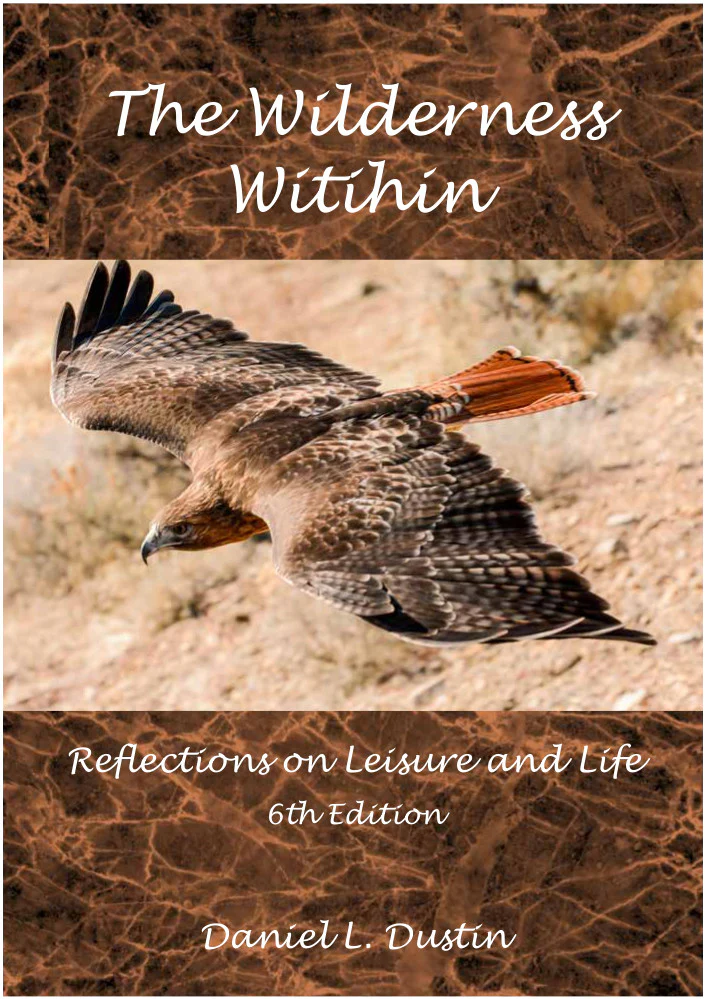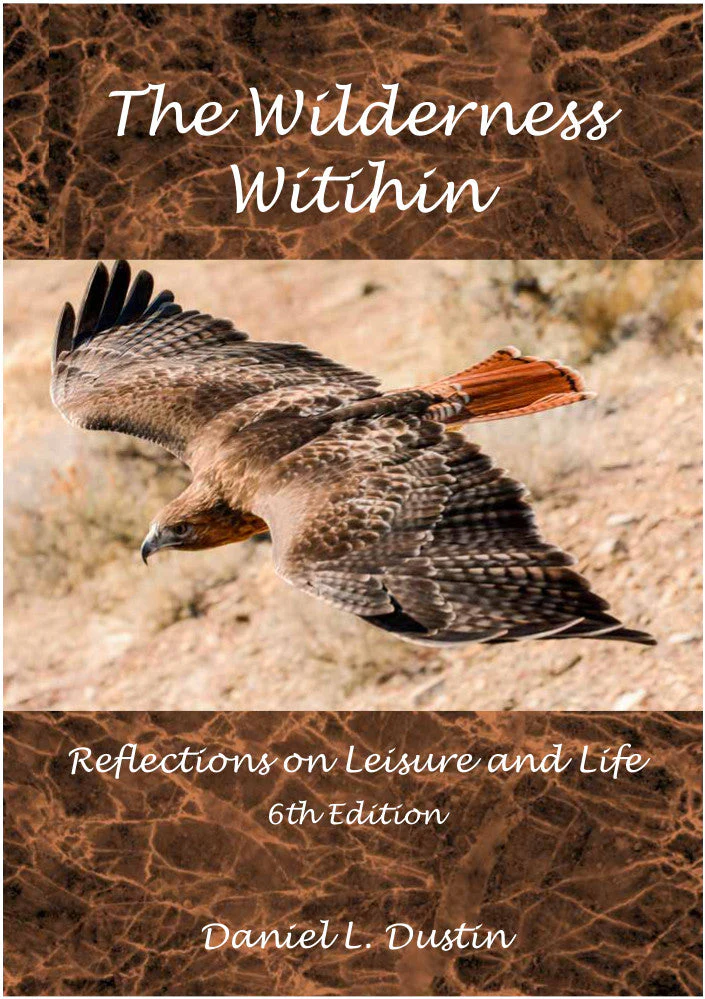
The Wilderness Within, 6th Ed. - eBook
In his wonderful little book, A Guide for the Perplexed, E. F. Schumacher organizes the ways we come to know the world around us into Four Fields of Knowledge. The First Field consists of our own feelings, feelings that cannot be experienced directly by anyone but us. The Second Field consists of the feelings of others, feelings that we cannot experience directly. The Third Field consists of our own appearance, an appearance visible to everyone but ourselves. Finally, the Fourth Field consists of the appearances of others, appearances visible to all but those who display them.
While wisdom about the world is derived from learning in all Four Fields of Knowledge, Schumacher reasons that knowledge about the First Field, or self-knowledge, is a precondition to everything else. How can we empathize with the feelings of others (Field Two) if we have not examined our own feelings? How can we interpret how others see us (Field Three) if we have no sense of ourselves? And how can we begin to understand the larger exterior world (Field Four) until we come to grips with our own interior one?
Most of the essays in this book are explorations in the First Field of Knowledge. They are about me from my perspective. They are about journeys I have taken to places “out there,” to the exterior world of mountains, forests, deserts, and tundra. But in a more important sense they are about journeys I have taken “in here,” in my interior world, a world invisible to you. Indeed, the fact that you cannot see what is going on inside my head is what compels me to write in the first place. I want to share with you what it is like to be me. But I also write from the conviction that in coming to know me better you will come to know yourself better as well.
I have added 26 essays to this sixth edition: five were written during my California years (“Leisure’s Role in Expanding Psychic Income,” “Managing Public Lands for the Human Spirit,” “With Only the Howl of a Timber Wolf,” “President’s Remarks,” and “Where Have You Gone, Charles Brightbill?”); six were written during my Florida years (“50 Years of Stewardship: The Ongoing Struggle to Preserve Everglades National Park”; “The Curious History of Dry Tortugas National Park”; “In the Company of Birds”; “Wide Open Spaces”; “Collaborative Conflict Resolution at Devils Tower National Monument”; and “Ban Snowmobiles in Yellowstone National Park: Why It’s the Right Thing to Do”); and four were written during my Utah years (“The National Parks: America’s Best Idea?”; “Thermus Aquaticus and You“; “Cry Me a River: The Healing Power of Moving Water”; and “Life as Synecdoche: Ansel Adams and the Expanding Liberal Democratic Tradition”). I also added nine essays to the Postscript (“The Is, the Ought, and the In Between: A Professor’s Life”; “A Model Professor”; “A ‘Little Engine that Could’”; “A Man Learning to Sing”; “Writing Scholarly Personal Narratives”; “The Matter of Authorship”; “The Downside of a Higher Education”; “Serving the Better Angels of Our Nature”; and “The Beach Boys in Concert”). Finally, I added two essays to the Synthesis (“Citizenship in the Age of Ecology” and “The Work We Do”). The 87 essays reflect what I was thinking and learning as I journeyed down my 43-year career path.
Original: $58.00
-65%$58.00
$20.30Product Information
Product Information
Shipping & Returns
Shipping & Returns
Description
In his wonderful little book, A Guide for the Perplexed, E. F. Schumacher organizes the ways we come to know the world around us into Four Fields of Knowledge. The First Field consists of our own feelings, feelings that cannot be experienced directly by anyone but us. The Second Field consists of the feelings of others, feelings that we cannot experience directly. The Third Field consists of our own appearance, an appearance visible to everyone but ourselves. Finally, the Fourth Field consists of the appearances of others, appearances visible to all but those who display them.
While wisdom about the world is derived from learning in all Four Fields of Knowledge, Schumacher reasons that knowledge about the First Field, or self-knowledge, is a precondition to everything else. How can we empathize with the feelings of others (Field Two) if we have not examined our own feelings? How can we interpret how others see us (Field Three) if we have no sense of ourselves? And how can we begin to understand the larger exterior world (Field Four) until we come to grips with our own interior one?
Most of the essays in this book are explorations in the First Field of Knowledge. They are about me from my perspective. They are about journeys I have taken to places “out there,” to the exterior world of mountains, forests, deserts, and tundra. But in a more important sense they are about journeys I have taken “in here,” in my interior world, a world invisible to you. Indeed, the fact that you cannot see what is going on inside my head is what compels me to write in the first place. I want to share with you what it is like to be me. But I also write from the conviction that in coming to know me better you will come to know yourself better as well.
I have added 26 essays to this sixth edition: five were written during my California years (“Leisure’s Role in Expanding Psychic Income,” “Managing Public Lands for the Human Spirit,” “With Only the Howl of a Timber Wolf,” “President’s Remarks,” and “Where Have You Gone, Charles Brightbill?”); six were written during my Florida years (“50 Years of Stewardship: The Ongoing Struggle to Preserve Everglades National Park”; “The Curious History of Dry Tortugas National Park”; “In the Company of Birds”; “Wide Open Spaces”; “Collaborative Conflict Resolution at Devils Tower National Monument”; and “Ban Snowmobiles in Yellowstone National Park: Why It’s the Right Thing to Do”); and four were written during my Utah years (“The National Parks: America’s Best Idea?”; “Thermus Aquaticus and You“; “Cry Me a River: The Healing Power of Moving Water”; and “Life as Synecdoche: Ansel Adams and the Expanding Liberal Democratic Tradition”). I also added nine essays to the Postscript (“The Is, the Ought, and the In Between: A Professor’s Life”; “A Model Professor”; “A ‘Little Engine that Could’”; “A Man Learning to Sing”; “Writing Scholarly Personal Narratives”; “The Matter of Authorship”; “The Downside of a Higher Education”; “Serving the Better Angels of Our Nature”; and “The Beach Boys in Concert”). Finally, I added two essays to the Synthesis (“Citizenship in the Age of Ecology” and “The Work We Do”). The 87 essays reflect what I was thinking and learning as I journeyed down my 43-year career path.